Hair loss affects nearly 40% of women by age 50 yet the conversation around hair transplants has long been dominated by men. In 2026, that is finally changing. A hair transplant for women is not only possible, it is increasingly common, highly effective, and more accessible than ever. Whether you are experiencing thinning along the crown, a receding hairline, or the aftermath of traction alopecia, this guide is written for you with the medical clarity, honest cost comparisons, and empathetic guidance you deserve.
Hair Transplant for Women: Busting the Biggest Myths
The most persistent myth in hair restoration is that transplants are exclusively a male treatment. This misconception has kept thousands of women from exploring a solution that could genuinely change their lives. Let's set the record straight.
- Myth: Women are not good candidates. In reality, women with androgenetic alopecia, traction alopecia, or scarring alopecia are excellent surgical candidates.
- Myth: The donor area will look shaved or obvious. Techniques like DHI and Sapphire FUE require minimal to no full shaving, preserving your existing length.
- Myth: Results look unnatural on women. When performed by experienced surgeons, female hairline design is meticulous, natural, and anatomically appropriate.
- Myth: Female hair loss is too diffuse to treat surgically. While diffuse unpatterned alopecia (DUPA) is a contraindication, most other forms respond well to the right technique.
According to the ISHRS, hair transplant procedures in Europe have increased by 240% over the last decade, with women representing one of the fastest-growing demographics yet fewer than 10% of current candidates are women, revealing a significant awareness gap that is only now beginning to close.
Female vs. Male Hair Loss: Understanding the Key Differences
Male and female hair loss follow distinct biological patterns, which is why treatment must be tailored accordingly.
The Ludwig Scale vs. the Norwood Scale
Men typically lose hair in a predictable receding pattern mapped by the Norwood scale. Women, by contrast, tend to experience diffuse thinning across the crown and top of the scalp classified by the Ludwig scale (Grades I–III). This diffuse pattern makes donor area selection and graft planning more complex, requiring surgeons with specific female hair restoration expertise.
Key differences include:
- Women rarely lose their frontal hairline entirely, but density diminishes across the top
- Donor areas (usually the back and sides) may also be thinner in women, requiring careful evaluation
- Hormonal factors including post-partum loss, menopause, and thyroid imbalance must be ruled out or stabilised before surgery
- Psychological impact of hair loss is statistically higher in women, making early intervention critical
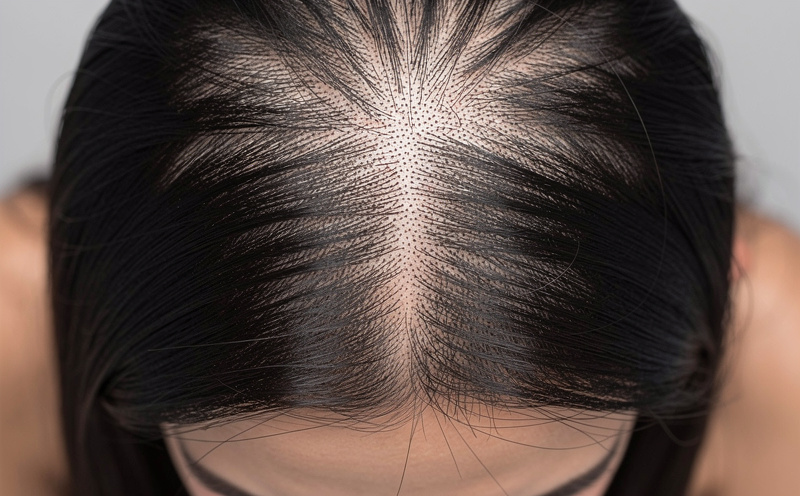
Which Women Are Good Candidates for a Hair Transplant?
Not every woman experiencing hair loss is automatically a surgical candidate. A thorough medical evaluation is essential before proceeding.
Ideal Candidates
- Women with androgenetic alopecia (female pattern hair loss) with stable donor areas
- Those with traction alopecia hair loss caused by years of tight hairstyles like braids or ponytails
- Women with scarring alopecia (e.g., from burns, surgeries, or certain skin conditions)
- Those with a defined, stable hair loss pattern that has not progressed rapidly
Common Contraindications
- Diffuse Unpatterned Alopecia (DUPA) when thinning affects the donor area as well, leaving no reliable graft source
- Active autoimmune conditions such as alopecia areata in its aggressive form
- Unstabilised hormonal hair loss (surgery should wait until the underlying cause is treated)
- Unrealistic expectations about density or coverage
💡 Always obtain a blood panel and dermatological assessment before consulting a surgeon. A reputable clinic will insist on this step it is a sign of quality, not a barrier.
Best Hair Transplant Techniques for Women in 2026
Not all techniques are equal when it comes to female hair transplant procedures. Here is how the main methods compare for women's specific needs.
DHI (Direct Hair Implantation) The Top Choice for Women
DHI is widely regarded as the gold standard for female hair transplants in 2026. Using a specialised Choi implanter pen, grafts are extracted and implanted directly without the need to shave the entire donor area. This makes it ideal for women who wish to keep their existing hair length throughout recovery.
- No full shaving required only small sections are trimmed
- Precise control over angle, depth, and direction of implanted hair
- Excellent for hairline refinement and density improvement
- Minimal scarring in the donor zone
Sapphire FUE Precision Extraction with Superior Healing
Sapphire FUE uses ultra-sharp sapphire blades to create micro-channels in the scalp. Compared to traditional steel blades, sapphire tips cause less tissue trauma, promote faster healing, and allow denser placement of grafts highly beneficial for women treating thinning crowns.
BHT (Body Hair Transplant) A Supplementary Option
For women with limited scalp donor density, Body Hair Transplant using nape, underarm, or leg hair can supplement graft numbers though it is rarely the primary approach and requires careful planning.
How Many Grafts Does a Woman Typically Need?
Graft count for women varies considerably based on the degree of thinning, the treatment area, and the desired density. Unlike men who often require 3,000–5,000+ grafts for extensive baldness, women typically address specific zones:
| Treatment Area | Typical Graft Range |
|---|---|
| Hairline refinement only | 500–1,500 grafts |
| Crown / top density improvement | 1,500–2,500 grafts |
| Traction alopecia (temples) | 800–1,800 grafts |
| Full top scalp coverage | 2,500–4,000 grafts |
A personalised assessment with trichoscopy and scalp mapping remains essential for an accurate graft estimate.
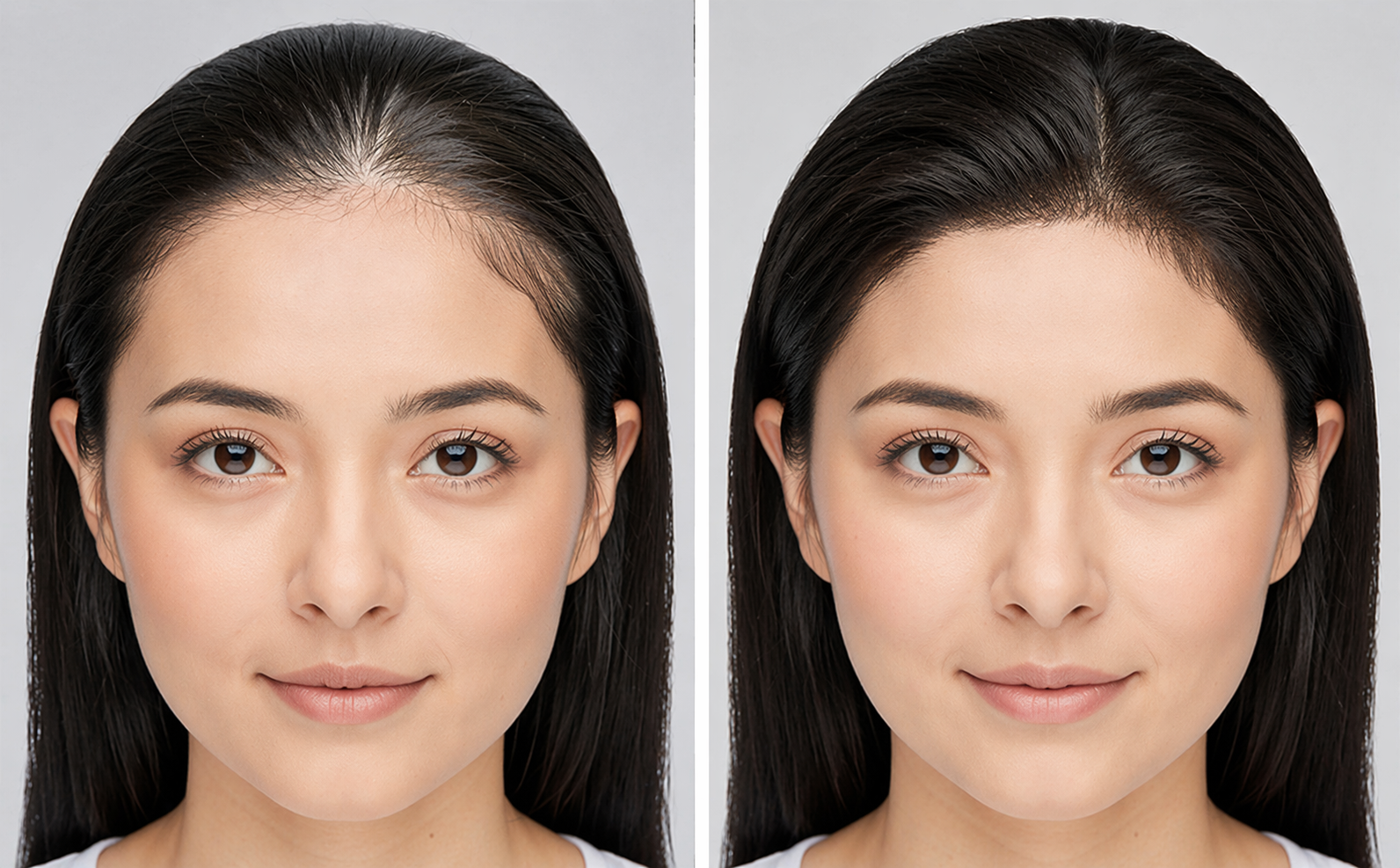
What Results Can Women Expect? The Before & After Timeline
Understanding the recovery and growth timeline is critical to managing expectations and making confident decisions about a female hair transplant.
- Days 1–14: Initial redness, slight swelling, and scabbing around implanted grafts. Normal and expected.
- Weeks 3–6: Shock loss transplanted hairs shed temporarily. This is part of the cycle, not failure.
- Months 3–4: New growth begins emerging, initially fine and soft.
- Months 6–8: Visible density improvement; styling becomes easier.
- Month 12–18: Final results fully visible natural texture, density, and hairline shape.
💡 Women often report faster visible results than men, partly because their existing hair helps camouflage the early regrowth phase more effectively.
Cost of a Female Hair Transplant: France vs. Turkey vs. Greece
Cost is one of the most important considerations for women exploring hair transplant women cost Turkey France comparisons. The price difference between destinations is significant and the quality gap has narrowed considerably in recent years.
| Country | Average Cost (DHI / Sapphire FUE) | Notes |
|---|---|---|
| Turkey | €1,500 – €3,500 | All-inclusive packages common; highly experienced surgeons |
| Greece | €3,000 – €6,000 | Growing medical tourism hub; EU standards |
| France | €5,000 – €12,000 | Higher overhead costs; limited specialist availability |
Turkey remains the most popular destination for female hair transplant 2026 procedures, offering all-inclusive packages that cover accommodation, transfers, and post-op care. Istanbul alone hosts hundreds of internationally accredited clinics performing thousands of female transplants annually.
When comparing destinations, always verify: surgeon credentials, clinic accreditation (JCI or equivalent), before/after portfolio for female patients specifically, and what is included in the quoted price.
How to Choose the Right Clinic as a Woman
Choosing a clinic for a hair transplant for women requires specific due diligence that goes beyond general advice:
- Ask to see female-specific before/after portfolios not just male results
- Confirm the surgeon has experience designing natural female hairlines, which differ anatomically from male ones
- Ensure the clinic offers no-shave or partial-shave DHI options if privacy during recovery matters to you
- Request a pre-operative blood panel and hormonal workup as part of the consultation
- Verify aftercare protocols post-op support is especially important for managing shock loss anxiety
Conclusion: Is a Hair Transplant the Right Solution for You?
A hair transplant for women in 2026 is no longer a niche or experimental procedure it is a well-established, highly effective solution for the right candidates. If you are experiencing stable hair loss due to androgenetic or traction alopecia, have a sufficient donor area, and have already addressed any underlying medical causes, surgery could be a life-changing step.
The key is making an informed decision with the support of professionals who understand your specific needs as a woman. At Imphair, we connect you with certified clinics in Turkey, Greece, France, and beyond ensuring you receive personalised guidance, transparent pricing, and compassionate care from consultation through to your final results.
Hair Transplant for Women: Your Questions Answered
FAQ
Absolutely. Women are increasingly common hair transplant candidates. While male pattern baldness has historically received more attention, procedures like DHI and Sapphire FUE are highly adapted to female hair loss patterns. Women with androgenetic alopecia, traction alopecia, or scarring alopecia are often excellent candidates and can achieve natural, lasting results.
Not necessarily. DHI (Direct Hair Implantation) and certain Sapphire FUE protocols allow for partial or no-shave procedures, where only small, discreet sections of the donor area are trimmed. This is one of the main reasons DHI is preferred for women you can return to daily life without obvious signs of surgery.
The price difference is significant. In Turkey, a female hair transplant typically costs between €1,500 and €3,500, often including accommodation, transfers, and aftercare. In France, the same procedure can range from €5,000 to €12,000. Many women choose medical tourism to Turkey for this reason, with no compromise on quality when selecting an accredited clinic.
Shock loss refers to the temporary shedding of transplanted (and sometimes surrounding) hairs 3–6 weeks after the procedure. It can be alarming, but it is a completely normal part of the hair growth cycle. The follicles remain intact beneath the scalp and new growth begins within a few months. Your surgeon should explain this clearly during your consultation to manage expectations.
The best way to confirm candidacy is through a professional evaluation including trichoscopy, scalp mapping, and a hormonal/blood panel. Generally, good candidates have a stable hair loss pattern, a sufficient donor area unaffected by thinning, and no active autoimmune or hormonal conditions driving ongoing loss. Imphair can connect you with qualified specialists who will provide an honest, personalised assessment.